
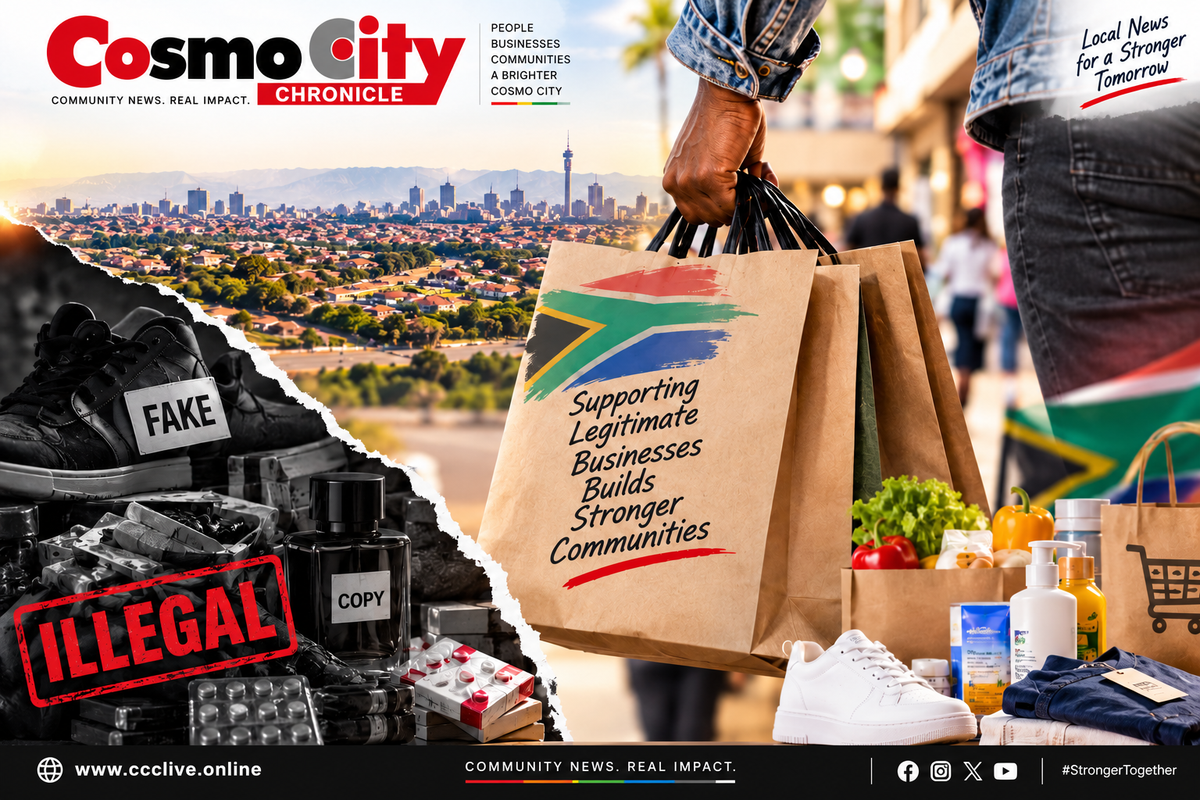
What may seem like a harmless bargain could be costing South Africa far more than we realise. A new study commissioned by the Consumer Goods Council of South Africa (CGCSA) has put a staggering figure to the country's illicit economy — an estimated R280 billion across 12 sectors.
The findings were discussed at a CGCSA event on Thursday, 3 September, bringing together industry representatives and stakeholders to look at one of the country's growing economic challenges.
For many consumers, buying an item at a cheaper price can simply come down to affordability. With the rising cost of living, families are constantly looking for ways to stretch their money. But the new research shows that the consequences of illicit trade reach much further than the transaction between a buyer and a seller.
A problem that affects jobs
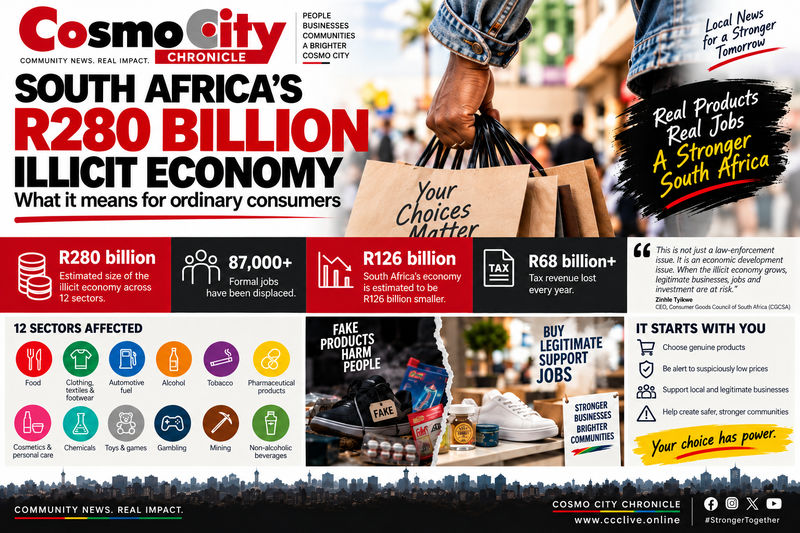
According to the study, illicit economic activity is linked to the displacement of more than 87,000 formal jobs. The impact is felt throughout the economy. When legitimate businesses lose customers to illegal operators, they may produce less, employ fewer people and reduce their investment.
The study estimates that the country's economy is approximately R126 billion smaller as a result of the impact of illicit trade. Government also loses billions in potential tax revenue. The research estimates that more than R68 billion in tax revenue is lost every year as a result of illicit economic activity. That is money that could otherwise contribute towards public services and infrastructure.
It is not just about cigarettes and counterfeit clothing
When people hear the words "illicit trade", they may immediately think about counterfeit clothing, cigarettes or alcohol. But the problem is much broader. The CGCSA-commissioned research looked at 12 different sectors, including food, clothing and footwear, automotive fuel, pharmaceuticals, cosmetics, chemicals, toys and games, alcohol and tobacco.
This means that illicit trade can potentially affect consumers in everyday parts of their lives. Some products may be cheaper because they have avoided legitimate taxes, regulations, distribution costs or other requirements that compliant businesses have to meet.
Why the cheaper option isn't always cheaper
For a family trying to make ends meet, saving R50 or R100 on a purchase can make a difference. The challenge is that consumers may not always know where a product came from, whether it meets safety standards or whether the money they spend is ultimately supporting an organised illicit network.
Counterfeit and illegally produced goods can also create risks for consumers, particularly where products such as food, medicines, cosmetics and other regulated goods are involved. The CGCSA's message is therefore not simply "don't buy illegal goods". It is about helping consumers understand what their purchasing choices mean for the wider economy.
Businesses are feeling the pressure too
Small and legitimate businesses are among those affected by illicit markets. A local business that pays employees, rent, electricity, taxes and suppliers has considerably different operating costs from an illegal operator who may bypass many of those obligations.
That can make it difficult for compliant businesses to compete on price. For small businesses in communities such as Cosmo City and surrounding areas, where entrepreneurs are already dealing with economic pressures, the issue is particularly important.
Every legitimate business that survives and grows has the potential to create employment and contribute to the local economy.
Fighting the problem will take everyone
The CGCSA says tackling the illicit economy cannot be left to law enforcement alone. Government, businesses, industry organisations, law-enforcement agencies and consumers all have a role to play.
The organisation has established multi-industry Illicit Economy Task Forces aimed at bringing different sectors together to address the problem and strengthen the fight against illicit and counterfeit trade.
But ultimately, consumers also have a choice. Every time we spend money, we are supporting a business, a supplier and a particular part of the economy. That does not mean every consumer can afford to choose the most expensive option. For many households, price is a reality. However, the CGCSA's latest research highlights the importance of understanding the bigger picture.
The bigger question
South Africa is battling unemployment, economic pressure and the high cost of living. At the same time, hundreds of billions of rand are estimated to be circulating outside the legitimate economy.
The question now is not simply how much illicit trade costs South Africa. It is what South Africa could achieve if more of that money was supporting legitimate businesses, creating jobs and contributing to the country's tax base.
For consumers, businesses and communities, the fight against illicit trade may therefore be much closer to home than we think.
Sources: Consumer Goods Council of South Africa (CGCSA) and CGCSA-commissioned illicit economy research.